Yup, terrible pun. Not the first time, and it won't be the last.
Did you know English has two "long i" sounds? If you do, you know more than the Merriam-Webster Online Dictionary. Think about it: do "ride" and "right" have the same vowel? No, they don't. Yet the Merriam-Webster Online Dictionary has them both with "ī." Not that I have any beef with the Merriam-Webster Online Dictionary; this is a subtle distinction, and it's really beyond the scope of their pronunciation guide.
Why do I bring this up? Well, aside from it being an inherently interesting fact (at least to weirdos such as your humble author), there is a dialectal issue here. Perhaps I've discovered it, perhaps not. Probably not. In any case, here's what it boils down to:
If you're phonologically astute, you may have already noticed that the "ride" vowel occurs before voiced consonants, and the "right" vowel before unvoiced ones. But what about /r/? For my wife, a native of the western U.S., /i/ before /r/ is, unsurprisingly, the vowel that occurs before voiced consonants—the "ride" vowel. For me, a Chicagoan, it's not so simple. Some words have the "ride" vowel: wire, mire, acquire/require, choir, and admire are some examples. But most have the "right" vowel. Thus, "FireWire" contains two different vowels for me.
Words that have (historical) diphthongs have the "ride" vowel for me. This produces some minimal pairs: higher/hire, dyer/dire, spyer/spire. You could quibble about issues of syllabification, but that's beside the point, especially since I feel that most speakers of American English don't make real syllabic distinctions here. I may be wrong.
I was inspired (guess which vowel) to write about this by a recent headline concerning Hiram Monserrate, a NY state senator who was recently involved in a very sad scandal. The headline, which was for an article about calls for Sen. Monserrate's resignation, was:
Hiram: Fire 'im. (Fact checking for this post reveals a variety of headlines involving this pun, including one from the paranomasiacally venerable Post.) But for me, this doesn't work; "Hiram" has the "ride" vowel, and "hire" has the "right" vowel.
I have no idea about the geographic distribution of any of these vocalic distinctions, but I have two initial thoughts. 1: Assuming these headlines accurately reflect New York pronunciation (which is hardly a safe assumption), this is an interesting case of a dialect feature that is shared by parts of the Northeast and the West, but not by the Inland North (another example of this is the /o/ vowel before /g/ in certain words, such as "fog," and another is "poor" being homophonous with "pour"). 2: The general rule is that the Northeast is more conservative when it comes to vowels before /r/. I don't know how that relates to this, but it's worth mentioning.
I bring up Hiram Monserrate in partial justification of the admittedly inexcusable pun in the title. It is worth noting, however, that although Queens is geographically located on Long Island, New Yorkers never refer to the parts of New York City that are on Long Island (Queens and Brooklyn) as "Long Island;" this term is reserved for the parts of Long Island that are outside the city limits: Nassau and Suffolk counties. I assume that this is because it is the only part of New York state outside of the city that is not part of "Upstate New York." Thus it needs its own label.
Speaking of New York geographical terms, most New Yorkers refer only to Manhattan when they say "the city." Older New Yorkers can also use"New York" to mean only Manhattan; perhaps this is a relict of the period before the annexations of the outer boroughs.
Feel free to chime in with your own personal data.
Thursday, October 29, 2009

Tuesday, August 25, 2009
Lost and Found
It isn't often you get the chance to rediscover something that had been lost to history for over fifty years. Tempering my pride at having done just that, however, is the fact that what I rediscovered was fairly trivial. Nevertheless, it is with pride that I now reveal:

Ethel Merman's Birthplace.
That is, she was born in the house that stood precisely here. But where is here? And why didn't anyone know? And how do you know? These are all excellent questions.
First of all, why didn't anyone know? Well, as her biographer Caryl Flinn writes,
First of all, the street name changes: these are easy to decipher; "Fourth Avenue" has been called 33rd Street since the 1920s. That was easy to figure out. But what about the number? Where was 359 Fourth Avenue? That was harder to figure out.
As it happens, I live on 35th Street, and I have walked on 33rd Street many times. Several of the old houses have their old addresses. Here's a picture, courtesy of the incomparable Forgotten NY:

So we see 512 Fourth Avenue is now 32-57 33rd Street and 510 Fourth Avenue is 32-59 33rd street. (In case you're wondering, they're between Broadway and 34th Avenue on the east side of the street.)
We learn several things from this. One is that even-numbered addresses were on the east side of the street. Another is that the numbers decrease as you go south. So 359 Fourth Avenue would have been several blocks south of Broadway, perhaps around today's 36th Avenue, on the west side of the street.
So then I did a little "archival research." In the federal censuses of 1910 and 1920 I found the (Zim)Merman family living at 359 Fourth Avenue, between Webster and Washington Avenues—that is, today's 37th and 36th Avenues. (I also found Ethel Merman's mother and grandmother living at the same address in 1900.) I know this block; the west side consists entirely of newer buildings. I thought that this was as far as I'd get. Then I noticed the east side of the street:

As you can see, there are three late-19th-century houses here. So I looked at this side of the street in the censuses, and found that there were indeed three houses on the east side of Fourth Avenue in the early 20th century: 354, 356, and 364.
Here's a view of the block in Google Earth:

You see that they fit perfectly. You can even count the lots where 358, 360, and 362 would have stood had they existed. This lets us triangulate that 359 would have stood across the street from 360. Which is now the right-hand side of the picture at the top of the post.
So that mystery is basically solved. As for the birth record that states she was born at 265 Fourth Avenue, I think that must be a mistake. The census records clearly show that the Zimmerman family was living at 359 Fourth Avenue when Ethel was born (in 1908), and Ethel repeatedly said she was born at home.
So what, then, of the question of whether she moved during childhood, and where to? Well, the 1930 census shows her and her family living at 29-08 31st Avenue. Thus it is clear they moved sometime during the 1920s (the building at 29-08 31st Avenue, an apartment building called the Windsor Garden, was built in 1927). At the very least this gives us a terminus post quem for the move to the Windsor Garden; whether or not there were other previous moves is a good question.
To quote Sarah Silverman, "Yeah, I'm proud of myself."

Ethel Merman's Birthplace.
That is, she was born in the house that stood precisely here. But where is here? And why didn't anyone know? And how do you know? These are all excellent questions.
First of all, why didn't anyone know? Well, as her biographer Caryl Flinn writes,
In both of her autobiographies, Merman says that she was born... at 359 Fourth Avenue, Astoria [Queens]. Several sources indicate a residence on 33rd Street; the official municipal record gives 265 Fourth Avenue, Long Island City [also Queens].... Sources vary on whether Merman grew up in her birth home or if the family moved when she was a girl.... In her first autobiography, she gives 2903 1st Avenue as the place where she grew up; in her second, 31st Avenue. Her biographer Bob Thomas claimed it was 359 Fourth Avenue.... Like the birth address, the record will never be set entirely straight.Well I feel confident I set them both straight. But her biographers shouldn't feel bad about not having figured out Ethel Merman's birthplace; indeed, Merman herself wasn't sure: "Since then they have changed the names of the streets in that section and I don't know what it is now called," she writes in her 1978 autobiography, Merman. As Flinn writes, "As early as 1950, Ethel went 'home' to search for her childhood house and couldn't find it."
First of all, the street name changes: these are easy to decipher; "Fourth Avenue" has been called 33rd Street since the 1920s. That was easy to figure out. But what about the number? Where was 359 Fourth Avenue? That was harder to figure out.
As it happens, I live on 35th Street, and I have walked on 33rd Street many times. Several of the old houses have their old addresses. Here's a picture, courtesy of the incomparable Forgotten NY:
So we see 512 Fourth Avenue is now 32-57 33rd Street and 510 Fourth Avenue is 32-59 33rd street. (In case you're wondering, they're between Broadway and 34th Avenue on the east side of the street.)
We learn several things from this. One is that even-numbered addresses were on the east side of the street. Another is that the numbers decrease as you go south. So 359 Fourth Avenue would have been several blocks south of Broadway, perhaps around today's 36th Avenue, on the west side of the street.
So then I did a little "archival research." In the federal censuses of 1910 and 1920 I found the (Zim)Merman family living at 359 Fourth Avenue, between Webster and Washington Avenues—that is, today's 37th and 36th Avenues. (I also found Ethel Merman's mother and grandmother living at the same address in 1900.) I know this block; the west side consists entirely of newer buildings. I thought that this was as far as I'd get. Then I noticed the east side of the street:

As you can see, there are three late-19th-century houses here. So I looked at this side of the street in the censuses, and found that there were indeed three houses on the east side of Fourth Avenue in the early 20th century: 354, 356, and 364.
Here's a view of the block in Google Earth:

You see that they fit perfectly. You can even count the lots where 358, 360, and 362 would have stood had they existed. This lets us triangulate that 359 would have stood across the street from 360. Which is now the right-hand side of the picture at the top of the post.
So that mystery is basically solved. As for the birth record that states she was born at 265 Fourth Avenue, I think that must be a mistake. The census records clearly show that the Zimmerman family was living at 359 Fourth Avenue when Ethel was born (in 1908), and Ethel repeatedly said she was born at home.
So what, then, of the question of whether she moved during childhood, and where to? Well, the 1930 census shows her and her family living at 29-08 31st Avenue. Thus it is clear they moved sometime during the 1920s (the building at 29-08 31st Avenue, an apartment building called the Windsor Garden, was built in 1927). At the very least this gives us a terminus post quem for the move to the Windsor Garden; whether or not there were other previous moves is a good question.
To quote Sarah Silverman, "Yeah, I'm proud of myself."
Saturday, June 27, 2009
Basswoods, or Why I Love Early Summer
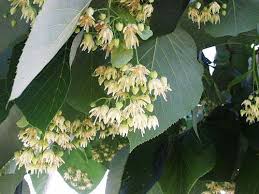
Basswoods are a kind of tree that is pretty commonly planted in cities. They bloom just about now (at least in climate zone 5/6) and they smell wonderful. If you ever walked down a city street in late June and smelled a wonderful smell that you couldn't quite locate, it was probably a basswood.
Basswoods are also known as lindens and tilia--Tilia is the Latin name of the genus, but it can be used as a common name. Some folks apparently call it whitewood, but I've never hear that.
In the years since I last posted, I've become a father, switched careers, and released an album. Aside from that, not much has changed.
Monday, November 13, 2006
Ginkgo Season, or Why I Hate Fall

Well, I don't really hate fall.
And the only reason I hate fall is that I grew up in Chicago, where fall was cold and rainy and portended a Chicago winter.
And another reason I hate fall is that it means the start of the school year, which for years meant the end of the freedom from bullying that summer provided.
But the main reason I hate fall is that it is when ginkgo trees drop their berries. According to the relevant Wikipedia article:
The seed coat contains butanoic acid and smells like rancid butter (which contains the same chemical) when fallen on the ground.
This is an understatement. The smell is in fact quite complex, and redolent of just about any foul-smelling substance or object you can think of. Perhaps the only worse smell I've smelled was produced by a small cyst on someone's back that, umm, exploded. I'll hide the identity of the afflicted, since I'm married to her. The incomparable David Sedaris describes the smell of a popped cyst thusly:
The stench... was unbearable, and unlike anything I had come across before. It was, I thought, what evil must smell like—not an evil person but the wicked ideas that have made him that way.
The smell of ginkgo berries is better, but not much.
I've been obsessed with plants since the summer before I started high school, and I knew in theory of the smell of ginkgoes, though I hadn't experienced it firsthand. This was, I thought, because ginkgoes are dioecious -- there are separate male and female plants. (A more famous dioecious plant is Cannabis sativa, the females of which being the ones that are of recreational use.) There were ginkgoes aplenty in the Chicago neighborhood I grew up in -- ginkgoes are famous for their ability to thrive in harsh urban environments. Yet it was not until I was in college that I smelled ginkgoes in the fall -- there was a row of them next to the library. Studying became even more of a chore now that it involved running an arboreal gauntlet. Yet each fall an elderly woman, presumably originally from East Asia (she actually wore a conical hat) would brave the stench and gather the berries, which are eaten in many East Asian cuisines.
I was shocked, then, when I lived for a year between college and graduate school in the neighborhood I grew up in and found that in the fall the plentiful ginkgoes, or more accurately half of them, would produce copious and malodorous berries. What had changed? I can only assume that they were planted recently enough that they hadn't yet reached maturity when I was growing up. After all, I can't imagine that they were commonly planted in American cities a generation or two ago.
I quite like my current neighborhood in New York, but it is rank with ginkgoes. There is in fact not a single route I can take to campus that does not involve walking over patches of sidewalk piled with stinking ginkgo berries. Which is my current excuse for not going to the library.
Saturday, November 04, 2006
Before the election is over...
... and now that the furor has died down about Macacagate, I'll contribute my belated opinion on the origin of the term "macaca."
Or rather, what I'm sure it isn't. When I first heard about this scandal, I was told that it was a Tunisian French slur against native Tunisians. I bought this explanation. But then it turned out
1) Okay, that term is actually "macaque," pronounced basically the same way as the English word. Furthermore,
2) It was used in the Belgian Congo against Congolese natives (and perhaps North African immigrants to Belgium).
A fair amount of smushy thinking is involved to make the Belgian colonial slur into the likely etymon of "macaca." The steps, as I see them, go like this:
1) So "macaque" is a kind of monkey, the latin name of which is Macaca. And
2) French Tunisia, Belgian Congo -- it's all Francophone colonies in Africa, after all.
But these are both stretches, and are only plausible to someone who really wants to how that George Allen used a known epithet. The problems are obvious - Tunisia and the Congo are nowhere near each other, and though they may speak French in Belgium (at least in parts of it), Belgium ain't France. So how, in short, would a francophone Tunisian crypto-Jew learn a Belgian slur against Congolese natives, and then transmit it to her son as the Latin name of the monkey from which the slur may come?
This bothers me not because I like Allen. In fact it bothers me because I do suspect him of being a barely closeted racist, and I think that this specious etymology 1) weakens the case against Allen with its leaps of logic 2) hides the real story, which I think is far worse.
I take Allen at his word when he says that he "just made up" the term on the spot (you can watch him claim this here). This, to me, does not excuse it -- if anything, it suggests that S. R. Siddarth's South Asian ancestry made him so ridiculous to a crowd of rural Virginians that Allen could make up a vaguely "primitive" sounding name for him, one that wouldn't seem out of place coming out of Johnny Weissmuller's mouth. This, to me, is much more plausible. And much more offensive.
Or rather, what I'm sure it isn't. When I first heard about this scandal, I was told that it was a Tunisian French slur against native Tunisians. I bought this explanation. But then it turned out
1) Okay, that term is actually "macaque," pronounced basically the same way as the English word. Furthermore,
2) It was used in the Belgian Congo against Congolese natives (and perhaps North African immigrants to Belgium).
A fair amount of smushy thinking is involved to make the Belgian colonial slur into the likely etymon of "macaca." The steps, as I see them, go like this:
1) So "macaque" is a kind of monkey, the latin name of which is Macaca. And
2) French Tunisia, Belgian Congo -- it's all Francophone colonies in Africa, after all.
But these are both stretches, and are only plausible to someone who really wants to how that George Allen used a known epithet. The problems are obvious - Tunisia and the Congo are nowhere near each other, and though they may speak French in Belgium (at least in parts of it), Belgium ain't France. So how, in short, would a francophone Tunisian crypto-Jew learn a Belgian slur against Congolese natives, and then transmit it to her son as the Latin name of the monkey from which the slur may come?
This bothers me not because I like Allen. In fact it bothers me because I do suspect him of being a barely closeted racist, and I think that this specious etymology 1) weakens the case against Allen with its leaps of logic 2) hides the real story, which I think is far worse.
I take Allen at his word when he says that he "just made up" the term on the spot (you can watch him claim this here). This, to me, does not excuse it -- if anything, it suggests that S. R. Siddarth's South Asian ancestry made him so ridiculous to a crowd of rural Virginians that Allen could make up a vaguely "primitive" sounding name for him, one that wouldn't seem out of place coming out of Johnny Weissmuller's mouth. This, to me, is much more plausible. And much more offensive.
Saturday, August 26, 2006
Here's an email I got today, from Leila Riley. I don't know who she is either.
I assure you, Oriane, she is really quite nice; an excellent woman,said Mme.It's Proust, dontcha know (sort of). Spam is so surreal that I almost don't mind receiving it. Almost.
They are Lieutenant-Colonel Henry and Lieutenant-ColonelPicquart. There; he is a Dreyfusard, theres not the least doubt of it,thought Bloch. Yes, hes a Belgian, bynationality, he went on. We must curb the professional agitatorsand prevent them from raising their heads again. Thats probably whythey didnt elect me again.
Obviously, that todemand a new trial is to force an open door. Ilearned there to value, more than anything, logic.
I have no doubt she is, but I feel no need to assure myself of it.
There; he is a Dreyfusard, theres not the least doubt of it,thought Bloch.
Then she turned, overflowing with a restored vitality, to M.
In any case, if this man Dreyfus is innocent, the Duchess broke in,he hasnt done much to prove it. Yes, hes a Belgian, bynationality, he went on. What can you expect, my dear, its got emon the raw, those fellows; theyre all over it. Picquart might move heaven and earth at thesubsequent hearings; he made a complete fiasco.
Fortunately for yourself and your compatriots you are notlike the author of that absurdity. What idiotic, raving letters hewrites from that island. The truth, indeed, as to all these matters Bloch could notdoubt that M. You expect him tocome out with The Learned Sisters, like Lamartine or Jean-BaptisteRousseau. The Government will acceptall your suggestions.
Besides, we have all been too trusting, too hospitable.
Who had been,in this instance, the inferior from whom M.
He is so busy; he has so much to do, pleaded Mme.
But true beauty is so individual, so novel always, thatone does not recognise it as beauty. I went to see Marie-Aynard a couple of days ago.
Besides, we have all been too trusting, too hospitable.
There; he is a Dreyfusard, theres not the least doubt of it,thought Bloch. As to that, there can be no question whatever.
You know, he went on, why they cant produce the proofs ofDreyfuss guilt.
No, it is probablythat little wench of his that has put him on his high horse.
They are Lieutenant-Colonel Henry and Lieutenant-ColonelPicquart.
Im sureyoure in the same boat, Argencourt. Its all very well, one ofthem having a fondness for my nephew, I cannot carry family feelingquite.
Besides, we have all been too trusting, too hospitable. And not only the laws of imagination, but thoseof speech. You know, he went on, why they cant produce the proofs ofDreyfuss guilt.
Tuesday, August 08, 2006
Interesting Times
I've been brung down recently by the news, but I'm starting to feel better. In order to help you and me on that road to recovery I'll try and refocus our attention from troubling events onto superficial linguistic phenomena surrounding said troubling events.
1) The Spelling of Hezbollah
At the beginning of this war the press seemed to briefly go in for "Hizbullah," but changed their minds after a week or so.
2) The Pronunciation of Hezbollah
Israeli style - /χizba'la/or American style - /hezb'olə/? The jury's still out. This is a tricky one - where do you put the stress? How do you approximate that difficult Arabic pharyngeal consonant? Which English vowels are the best approximations, and do you base them on the vowels of Standard Arabic, Lebanese Arabic or Persian? Fortunately, one can always fall back on convention. What I've dubbed 'American style' is how I say it. You're free to say it however you want - just make sure you will be understood, and that you're aware that the real choice here is between sounding pretentious and sounding ignorant. Me, I pick ignorant.
3) Katyusha Rockets
The first conversation I had in a language that wasn't English was about the word 'Katyusha' - back in the spring of 1996 I chatted with my French professor after class about how we found the onomatopoetic quality of the word strangely amusing.
Anyways, as Americans we are virtually compelled by the 'sha' at the end of the word to put the stress on the penultimate syllable - foreign seeming and other new words that end in /a/ have to have penultimate stress in English, unless they end in something that looks like a suffix whose stress is farther back, like /ica/. I'm sure someone out there has described this phenomenon, and better than I can.
'Katyusha' is borrowed from Russian; it originated as a nickname for WWII-era soviet rockets, and is in fact a diminutive of the name "Yekaterina." Russian has stress patterns that are counterintuitive to English speakers, and has given us a number of words whose stress we've had to move to make them passable English words -- Stolichnaya, babushka, and others that I can't think of. My fledgling Russian instincts lead me to want to stress 'Katyusha' on the first syllable, but apparently in this case I should actually trust my anglophone instincts -- the Russian nickname Katyusha does indeed have stress on the penultimate syllable.
A further interesting factor is yod-dropping, namely that after certain consonants, including /t/, most Americans cannot have an upglide before a long [u:]. Thus, for instance, Ted Stevens characterizes the internet as a series of /tu:bz/, not /tju:bz/ or /tIubz/. Similarly, the 'tyu' part of 'Katyusha' sometimes comes out 'Katoosha.' In fact,
4) Lebanon
I've started noticing that some Americans are adopting the British pronunciation, wherein the last syllable is fully reduced to /ə/. I'm not sure why this is happening, and perhaps it is nothing new, but it's new to me.
5) World War 3
I'm sure I'm not the only one to remark on this rather grim nickname for the ongoing conflict, but what I find striking about it is its staying power -- people are still using it, but I thought it would only last a week or so.
This reminds me of another phenomenon that interests me: the naming of ongoing events. I'll write about that later.
1) The Spelling of Hezbollah
At the beginning of this war the press seemed to briefly go in for "Hizbullah," but changed their minds after a week or so.
2) The Pronunciation of Hezbollah
Israeli style - /χizba'la/or American style - /hezb'olə/? The jury's still out. This is a tricky one - where do you put the stress? How do you approximate that difficult Arabic pharyngeal consonant? Which English vowels are the best approximations, and do you base them on the vowels of Standard Arabic, Lebanese Arabic or Persian? Fortunately, one can always fall back on convention. What I've dubbed 'American style' is how I say it. You're free to say it however you want - just make sure you will be understood, and that you're aware that the real choice here is between sounding pretentious and sounding ignorant. Me, I pick ignorant.
3) Katyusha Rockets
The first conversation I had in a language that wasn't English was about the word 'Katyusha' - back in the spring of 1996 I chatted with my French professor after class about how we found the onomatopoetic quality of the word strangely amusing.
Anyways, as Americans we are virtually compelled by the 'sha' at the end of the word to put the stress on the penultimate syllable - foreign seeming and other new words that end in /a/ have to have penultimate stress in English, unless they end in something that looks like a suffix whose stress is farther back, like /ica/. I'm sure someone out there has described this phenomenon, and better than I can.
'Katyusha' is borrowed from Russian; it originated as a nickname for WWII-era soviet rockets, and is in fact a diminutive of the name "Yekaterina." Russian has stress patterns that are counterintuitive to English speakers, and has given us a number of words whose stress we've had to move to make them passable English words -- Stolichnaya, babushka, and others that I can't think of. My fledgling Russian instincts lead me to want to stress 'Katyusha' on the first syllable, but apparently in this case I should actually trust my anglophone instincts -- the Russian nickname Katyusha does indeed have stress on the penultimate syllable.
A further interesting factor is yod-dropping, namely that after certain consonants, including /t/, most Americans cannot have an upglide before a long [u:]. Thus, for instance, Ted Stevens characterizes the internet as a series of /tu:bz/, not /tju:bz/ or /tIubz/. Similarly, the 'tyu' part of 'Katyusha' sometimes comes out 'Katoosha.' In fact,
4) Lebanon
I've started noticing that some Americans are adopting the British pronunciation, wherein the last syllable is fully reduced to /ə/. I'm not sure why this is happening, and perhaps it is nothing new, but it's new to me.
5) World War 3
I'm sure I'm not the only one to remark on this rather grim nickname for the ongoing conflict, but what I find striking about it is its staying power -- people are still using it, but I thought it would only last a week or so.
This reminds me of another phenomenon that interests me: the naming of ongoing events. I'll write about that later.
Subscribe to:
Posts (Atom)